
What Research Applications is LUMO fNIRS Suitable For?
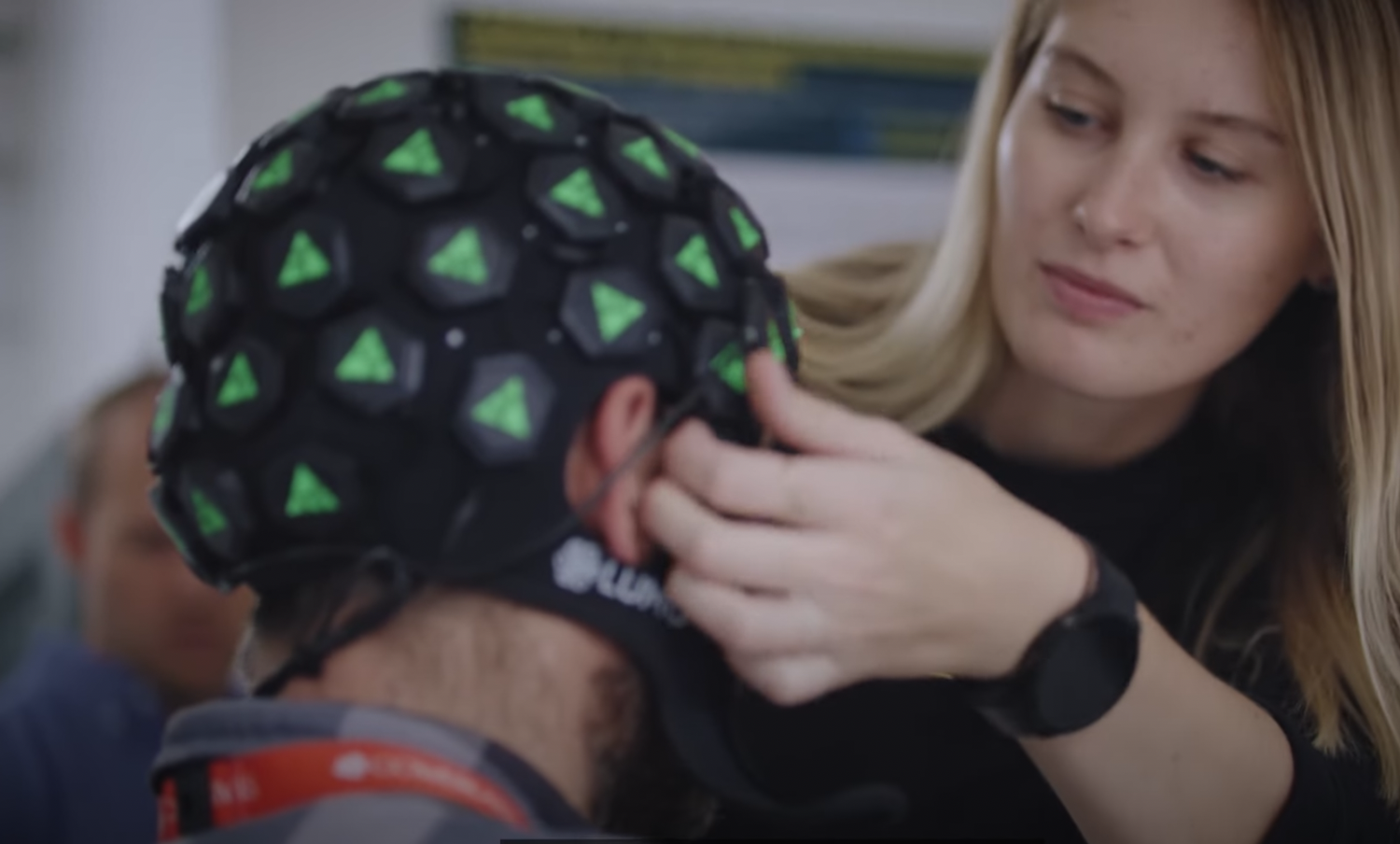
LUMO fNIRS is a versatile high-density diffuse optical tomography (HD-DOT) platform that can be used for a variety of cognitive and neuroscience studies. It is appropriate for both focused studies and extensive cortical mapping because of its modular architecture, which enables researchers to set up systems ranging from small region-of-interest arrays to full-head imaging. LUMO fNIRS facilitates research that goes beyond the capabilities of conventional laboratory-based neuroimaging systems by combining high spatial resolution with exceptional participant mobility.
Research Fields Supported by LUMO fNIRS
LUMO is widely applicable across numerous research fields, including:
Cognitive neuroscience
Psychology
Cognitive science
Clinical neuroscience
Neurorehabilitation
Developmental neuroscience
Infant and neonatal research
Hyperscanning
Human factors and neuroergonomics
Education research
Sports science
Brain-computer interface research
Naturalistic and Movement-Based Research
Because of its wearable design, LUMO fNIRS is especially useful for movement-based and naturalistic research where participants can carry out realistic tasks while brain activity is continuously tracked.
Virtual reality, eye tracking, EEG integration, sleep research, pilot fatigue monitoring, social interaction, rehabilitation, home-based neuroimaging, and functional ultrasound integration are just a few of the areas in which researchers have effectively employed LUMO fNIRS.
Developmental Neuroscience and Lifespan Studies
LUMO fNIRS is a very good fit for the field of developmental neuroscience. Longitudinal studies across the lifespan are made possible by the availability of specialized headgear for neonates, infants, children, and adults.
Researchers can study brain function during natural sleep, parent-child interaction, language development, and early cognitive development with little discomfort to participants because the system is lightweight, silent, and does not require participants to stay inside a scanner.
Clinical and Multimodal Neuroscience Research
LUMO's quick setup and fiberless design make patient studies and bedside monitoring easier in clinical settings.
The technology has been utilized by researchers in hospital settings, neonatal intensive care units, and rehabilitation settings where traditional neuroimaging equipment would not be feasible.
Multimodal neuroscience experiments can benefit greatly from the platform's ability to integrate with modalities like EEG, eye tracking, tDCS, and Lab Streaming Layer (LSL).
Key Research Applications of LUMO fNIRS
Supports neuroscience and cognitive research using HD-DOT.
Configurable for region-of-interest imaging or full-head cortical mapping.
Suitable for cognitive, clinical, developmental, and rehabilitation research.
Enables naturalistic studies involving movement and real-world interactions.
Compatible with virtual reality, eye tracking, EEG, sleep research, and functional ultrasound integration.
Supports longitudinal studies from neonates to adults with dedicated headgear.
Simplifies bedside and hospital-based neuroimaging through rapid setup and a fibreless design.
Integrates with EEG, eye tracking, tDCS, and Lab Streaming Layer (LSL) for multimodal neuroscience research.
If you’d like to dive deeper into any particular study or point, feel free to ask us at parag@tidentech.com or tidentech@gmail.com or call us on +91 9987442274.
Tiden Technologies
For both academic and commercial uses, Tiden Technologies is a top supplier of cutting-edge neuroscience, eye tracking, biosensing, and human behavior research technologies.